We are going to be looking at:
- These are terrestrial ecosytems bordering or near the sea
- Beach and dune communities
- Rock pavement vegetation
- Coastal Scrub
- Littoral woodland/forest
Sand dune and beach vegetation
The vegetation on windward beaches typically constitutes a sere where the vegetation changes along an environmental gradient. Nearest the sea, in a pioneer zone, plants like the succulents, seaside samphire (Sesuvium portulacastrum) and Blutaparon vermiculare, as well as the two crab grasses, Sporobolus virginicus and Paspalum distichum, survive in sparse patches. Further inwards, the fleshy vine, Goat’s foot Ipomoea ( Ipomoeapes-capre ssp. brasiliensis) dominates, trapping sand to form small dunes. This merges with a shrubby zone where soil has a higher organic content and where seagrape (Coccoloba uvifera) and fat pork (Chrysobalanus icaco) typically dominate. This is the zone of the high dunes and in their shelter scrub and scattered trees such as manchineel are found.
Leeward beaches tend to be narrower and lack the dunes which may be present on windward coasts. On leeward beaches, pioneer plants are less common and strand (above high tide mark) vegetation of Goat’-foot Ipomoea often abruptly gives rise to scrub and littoral woodland (if this has not been cleared for beach-front properties!)
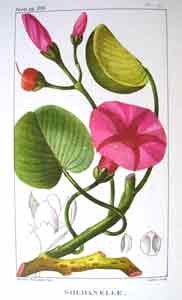
Ipomoea pes-capre
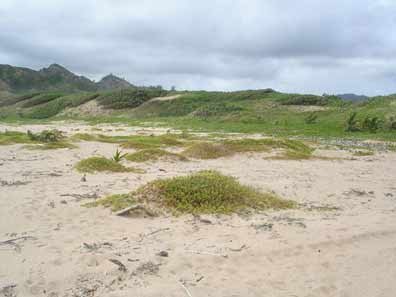
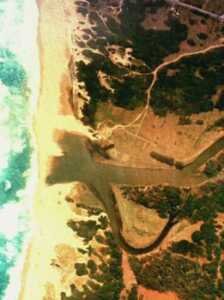
dune community at Lakes on the
east coast of Barbados.
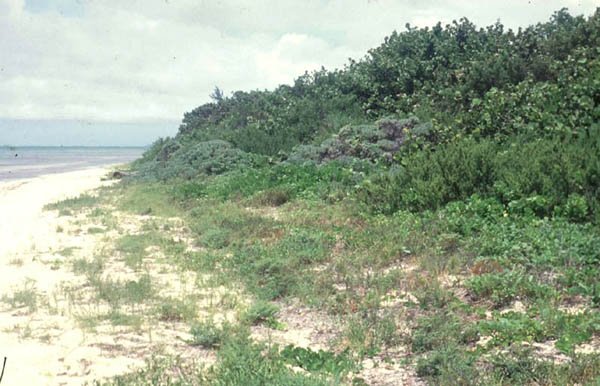
Photo © Sean Carrington
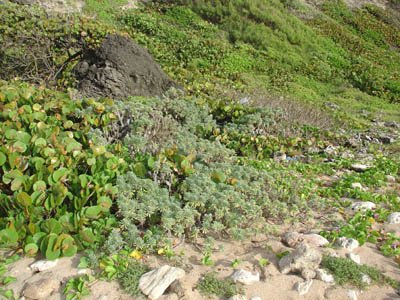
Barbados Photo © Sean Carrington
Environmental features
High salinity, high irradiation, lack of water, (wind)
Animal members
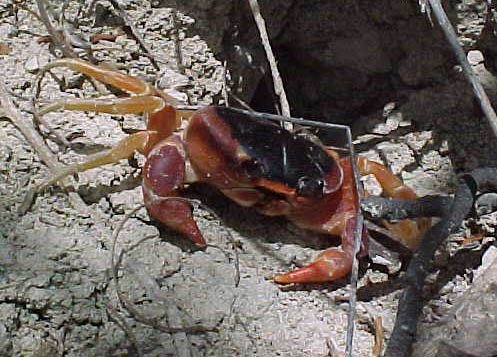
Ghost crabs, birds
Caribbean Vegetation Mapping Project Equivalent
VII.C.2.N.b. Intermittently flooded sand beaches and shores (STRAND VEGETATION)
VII.C.1.N.a. Dunes with sparse herbaceous vegetation (DUNES WITH SPARSE VEGETATION)
VII.C.2.N.b. Intermittently flooded sand beaches and shores (STRAND VEGETATION)
VII.C.1.N.a. Dunes with sparse herbaceous vegetation (DUNES WITH SPARSE VEGETATION)
Rock pavement/ sea cliff
Often sheer cliffs emerge from the sea with little or no beach below. Within reach of sea spray the succulent seaside samphire (Sesuvium portulacastrum) and Blutaparon vermiculare are found rooted in pockets of soil in the bare rock in the platforms of uplifted coral reefs. Sometimes severely dwarfed trees (whitewood, manchineel) and shrubs survive, rooted in fissures in the rock. Further back, low-lying succulent herbs carpet soil-filled depressions in the rock pavement to form a mat-like vegetation. Such associations give way further inland to coastal scrub and littoral forest.
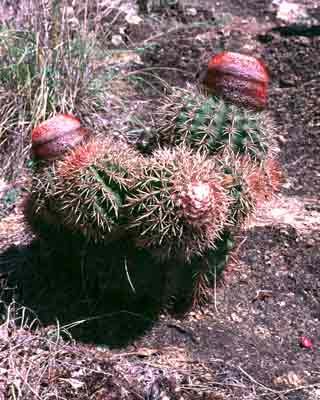
Caribbean-wide endemic common on coastal cliffs.
Photo © Sean Carrington
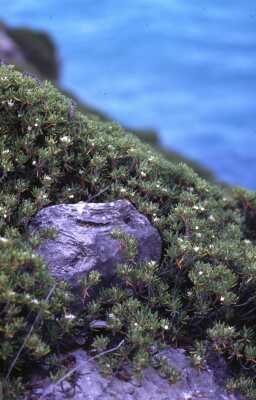
Photo © Sean Carrington
Major environmental features
High salinity, high irradiation, lack of water, lack of soil, (wind)
Animal Members
Birds, Lizards to name a few
Caribbean Vegetation Mapping Project Equivalent
VII.A.1.N.a. Cliffs with sparse vascular vegetation (CLIFF VEGETATION)
VII.A.2.N.a. Pavement with sparse vascular vegetation (PAVEMENT VEGETATION)
Littoral or coastal woodland
Is a dry, mainly evergreen, woodland with trees like sea grape ( Coccoloba uvifera), whitewood (Tabebuia spp.), manchineel
(Hippomane mancinella), birch gum (Bursera simaruba) and bearded fig (Ficus citrifolia) dominating. In its most wind-swept form it resembles the hedge and coastal scrub that develops behind sand dunes. It may include clumps of pipe organ cactus (Pilosocereus royenii).
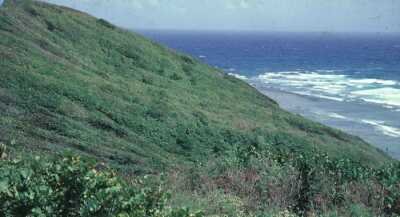
Photo © Sean Carrington
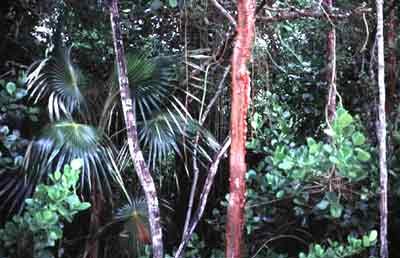
were common in the littoral forests of various islands. This photo shows such a
remnant forest in Grand Cayman with birchgum (Bursera simaruba) and the Cayman
thatch palm (Coccothrinax proctorii). Photo © Sean Carrington
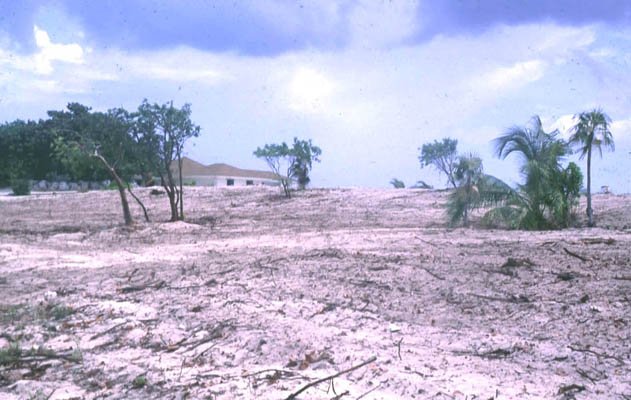
Click here to see the fate of the coastal forest in the Caribbean
Site cleared of coastal forest on Grand Cayman, save a few “desireable” palm trees!
Major environmental features
Low rainfall, shallow soil, (salt spray and wind)
Animal Members
Lizard, hermit crabs, birds, spiders to name a few.
Caribbean Vegetation Mapping Project Equivalent
II.A.1.N.a. Tropical or subtropical broad-leaved evergreen woodland
Hippomane mancinella – Coccoloba uvifera Woodland Alliance
Coccothrinax barbadensis Woodland Alliance
I.C.1.N.a. Lowland tropical or subtropical semi-deciduous forest
Tabebuia pallida – Coccoloba swartzii – Bursera simaruba Forest Alliance
Coastal scrub / thorn scrub
Vegetation dominated by shrubs like seaside sage (Croton flavens), fat pork (Chrysobalanus icaco), bread ‘n cheese (Pithecellobium unguis-cati) and white sage (Lantana involucrata). Spiny shrubs like horse nicker (Caesalpinnia bonduc) are often present as well as cacti, Agave spp. and vines. If this is totally impenetrable and over head height it would be termed coastal thicket. Intergrades with coastal woodland.
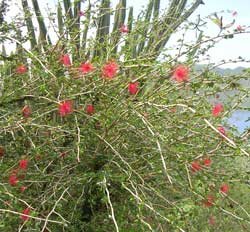
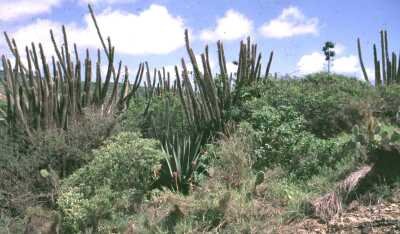
at the rear. Photo © Sean Carrington
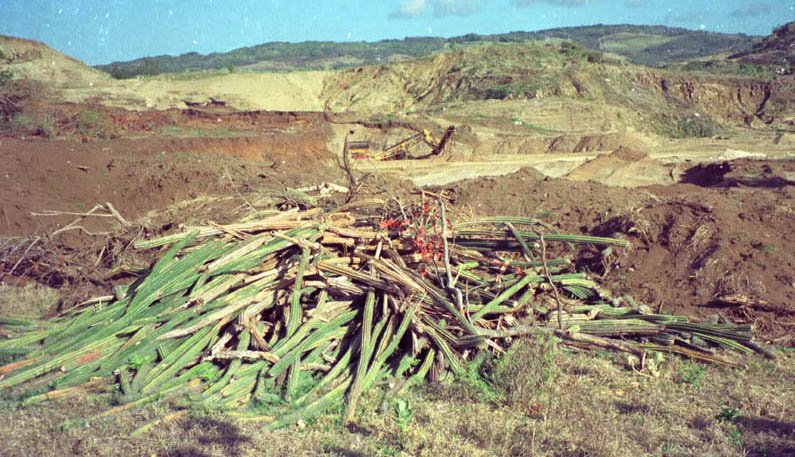
Click here to see what can happen to this plant community
Sand mining in Barbados in what was once a thorn scrub community
Major environmental features
Low rainfall, shallow soil, salt spray and wind
Animal members
Birds, lizards, bats and a wide range of invertebrates.
Read about the survival of the Antiguan Racer snake on an off-shore island.
Caribbean Vegetation Mapping Project Equivalent
III.A.1.N.a. Tropical or subtropical broad-leaved evergreen shrubland
Pithecellobium unguis-cati Shrubland Alliance
III.A.1.N.b. Hemisclerophyllous tropical or subtropical broad-leaved evergreen shrubland
Coccoloba uvifera Shrubland Alliance